Feather Continuous Line: A Craft Fair Designer's Review
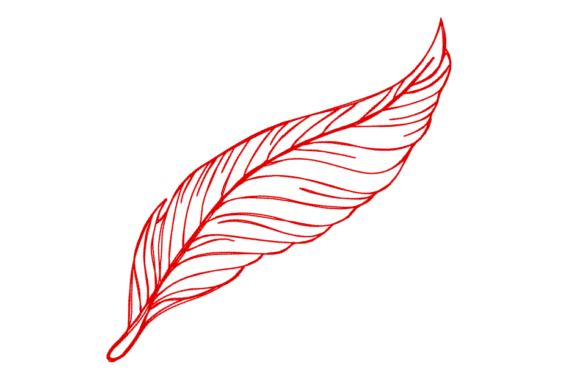
As an embroidery designer preparing for a busy weekend at the local artisan market, my table needs to tell a story instantly. Customers walk by quickly, scanning for something that catches their eye without overwhelming them. This is where Feather Continuous Line enters the conversation. Upon loading this machine embroidery design into my software and viewing the simulation, the first impression is one of effortless elegance. It feels minimal yet decorative, striking a perfect balance between modern simplicity and rustic charm. For a booth filled with handmade goods, this whimsical feather offers a soft, organic touch that appeals to buyers looking for gentle, nature-inspired aesthetics.
Visual Impact and Booth Display Strategy
The defining characteristic of Feather Continuous Line is its single-line construction. In a sea of dense, colorful logos and complex floral patterns, this design stands out because of what it doesn't have: bulk. When evaluating it for a craft fair product lineup, I immediately see its potential as a high-value accent. It does not scream for attention; rather, it invites the customer to lean in. This subtlety is powerful for boutique makers who want their brand to feel premium and thoughtful.
On a display table, this design shines brightest on light-colored, smooth fabrics where the continuous line can be traced easily by the eye. Imagine a stack of natural linen tote bag design samples. The feather, stitched in a contrasting charcoal or sage green thread, becomes the focal point without dominating the entire bag. It suggests a "less is more" philosophy that resonates deeply with current trends in home decor and fashion accessories. For Etsy sellers creating printable mockup images, this design photographs beautifully because it lacks heavy shadows or bulky stitch buildup, resulting in clean, professional listing photos.
Ideal Products for Maximum Sales
Not every design works on every substrate, but Feather Continuous Line is incredibly versatile due to its delicate nature. Here is how I would deploy it across a typical market inventory:
- Tote Bags and Market Totes: This is the prime real estate for this design. Placed centrally or in a corner, it elevates a plain canvas bag into a chic, everyday accessory.
- Apron Embroidery: For kitchen enthusiasts, stitching this feather on the bib of a linen apron adds a whimsical, artistic flair that feels personal and handmade.
- Tea Towel Embroidery: Because the description notes suitability for delicate fabrics, this is perfect for flour sack towels. The light stitch count ensures the towel remains absorbent and soft.
- Embroidered Patches: Creating iron-on patches allows customers to buy the design without committing to a whole garment. These are excellent low-cost impulse buys at a booth.
- Pillow Covers: A large-scale version of the feather on a throw pillow cover creates a sophisticated, farmhouse-style statement piece.
- Caps and Hats: While possible, curved surfaces require caution. The continuous line must be small enough to follow the curve without distortion.
Production Practicality and Batch Efficiency
For a small shop product line, time is money. One of the strongest selling points of Feather Continuous Line is its efficiency. As a one-line embroidery pattern, it likely has a lower stitch count compared to filled designs. This means faster cycle times on the machine, allowing for higher volume production before the fair. It is an ideal candidate for batch production; you can hoop multiple items and let the machine run while you manage other aspects of your business.
However, speed should never compromise quality. Even with a simple design, stitch density matters. If the line is too sparse, it may look skimpy on thick fabric. If it is too dense, it risks puckering delicate materials. Since this is a digital embroidery file intended for various formats, it is crucial to verify that the digitizing maintains a consistent line weight across different sizes. For commercial embroidery purposes, consistency is key to maintaining brand integrity across hundreds of units.
Critical Considerations for Fabric and Thread
While the design is described as suitable for delicate fabrics, real-world application requires careful judgment. When working with textured towels or thick canvas, a single continuous line can sometimes get lost in the weave. To combat this, I recommend using a slightly thicker thread weight or choosing a high-contrast thread colors scheme. For instance, a white feather on a cream towel might vanish, whereas a navy blue feather on the same towel pops instantly.
There are specific scenarios where extra care is needed:
- Dense Stitch Areas: Although this is a line design, ensure the start and stop points do not create unsightly knots or bulk, especially on thin fabrics like silk or rayon blends.
- Small Lettering and Details: If you plan to combine this feather with text, ensure the font size is large enough to remain legible next to the fine line of the feather.
- Curved Surfaces: On caps, the continuous line must be centered perfectly. Any deviation will be obvious because there is no fill to hide misalignment.
- Dark Fabric: Ensure the design includes underlay stitches if running on dark materials to prevent the fabric color from showing through the single line.
Enhancing Brand Value and Customer Engagement
In the context of Birds and nature-themed Embroidery, this design avoids the cliché of overly realistic or cartoonish birds. Instead, it captures the essence of flight and freedom through abstraction. This artistic approach increases the perceived value of the finished product. Customers often associate minimalist line art with higher-end boutique goods, allowing you to price your items slightly higher than generic, mass-produced alternatives.
Furthermore, the versatility of Feather Continuous Line supports strong brand consistency. Whether a customer buys a patch, a tote, or a tea towel, the recurring motif of the continuous feather creates a cohesive collection. This visual repetition helps build brand recognition, making your booth memorable long after the fair ends.
Final Designer Notes and Testing Protocol
Before committing to a full production run for the weekend market, rigorous testing is non-negotiable. Do not assume the embroidery file is perfect straight out of the download folder. Follow these steps to ensure success:
- Test on Scrap Fabric: Always stitch a sample on the exact same material you intend to sell. Feel the back of the design to check for excessive bulk.
- Check Stabilizer: For delicate fabrics, a cut-away or high-quality tear-away stabilizer is essential to prevent puckering during the wash.
- Review Spacing: If scaling the design up or down, ensure the line thickness remains appropriate for the new size.
- Confirm Hoop Size: Verify the required hoop size fits your machine and the item you are embroidering, especially for smaller items like pouches.
- Create a Real Mockup: Digital previews are helpful, but nothing beats holding the physical item to judge the drape and hand-feel.
- Licensing Check: Before selling, confirm the commercial licensing terms included with the file to ensure you are compliant for retail sales.
In conclusion, Feather Continuous Line is a standout asset for any creative entrepreneur. Its blend of whimsy and minimalism makes it a versatile design asset that performs well across a wide range of handmade products. By paying attention to fabric texture, thread contrast, and proper stabilization, you can transform this simple digital file into a best-selling staple of your craft fair booth.