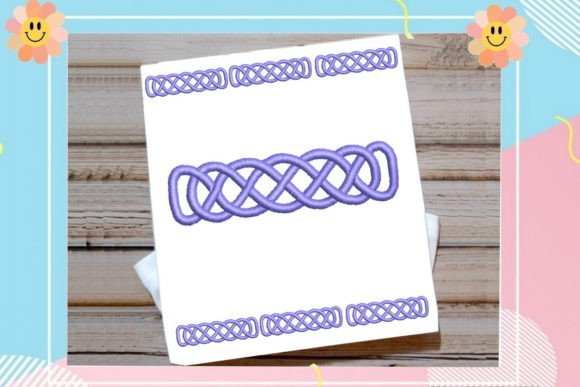
Rope Border: A Designer’s Review for Craft Fair Success
As an embroidery designer who has spent countless weekends behind a booth table, I know that the difference between a browsing customer and a buying customer often comes down to visual impact. When I first loaded the Rope Border machine embroidery design into my software, my immediate thought was about versatility. The product description promises a look that is both sweet and modern, a combination that is notoriously difficult to achieve in stitch form. Usually, designs lean heavily into one aesthetic or the other. However, this border strikes a balance that feels fresh, making it an ideal candidate for anyone looking to elevate their handmade product line.
First Impressions: Modern Sweetness in Stitch Form
The initial appeal of Rope Border lies in its clean lines and decorative nature. It does not scream for attention with chaotic elements; instead, it offers a structured elegance that frames whatever fabric it touches. For a craft fair seller, this is crucial. You need designs that look premium from three feet away but hold up under close inspection. This design feels decorative without being overly busy, which allows the quality of your fabric and thread work to shine. It avoids the trap of looking too rustic or too juvenile, positioning itself firmly in the "modern handmade" category that performs exceptionally well on platforms like Etsy and in boutique markets.
Strategic Product Placement for Maximum Sales
When preparing my display for a weekend market, I am always selective about which items carry which designs. Rope Border is not just a pretty picture; it is a functional asset for specific products. Here is how I envision it performing across different categories:
- Tote Bags and Market Bags: This is arguably the strongest application. A tote bag offers a large, flat canvas where a border can run along the top hem or frame a central monogram. The rope motif adds texture to what is often a plain cotton or canvas surface, increasing the perceived value of the tote bag design.
- Apron Embroidery: An apron benefits immensely from a defined edge. Placing this border along the bib or the waistband creates a finished, professional look that separates a homemade item from a handmade product. It suggests durability and style, two key selling points for kitchenware.
- Tea Towel Embroidery: Kitchen textiles are staple small shop products. Because towels have a distinct weave, you must be careful with stitch density. However, if executed correctly, this border can turn a standard tea towel into a giftable item. It works best when placed near the bottom hem, acting as a subtle accent rather than overwhelming the fabric texture.
- Embroidered Patches: If you sell patches, this design is a winner. Borders translate beautifully to patch format because they define the shape clearly. Customers love adding these to denim jackets or backpacks, and the rope aesthetic provides a classic nautical or rustic vibe depending on your thread colors.
Production Practicality and Batch Efficiency
For those of us running a business, time is money. One of the most appealing aspects of Rope Border is its potential for repeatability. Unlike complex scenic designs that require frequent thread changes and long run times, a border design is often more straightforward. This makes it easier to produce in batches. If you are stocking up for a holiday fair, you can hoop multiple caps or pouches and let the machine run with minimal supervision, provided you have tested the design thoroughly.
Photography is another critical factor. This design photographs well because it creates clear contrast against solid backgrounds. For your Etsy listings or printable mockup assets, the defined lines of the rope will pop, making your digital embroidery file appear high-quality and professional. Clear images lead to higher click-through rates, which is essential for online visibility.
Careful-Use Notes: Avoiding Common Pitfalls
While Rope Border is versatile, it is not without its technical demands. As an experienced designer, I must highlight several areas where caution is required to ensure your finished product meets professional standards.
- Fabric Texture and Stability: Textured towels or thick fabrics can distort fine details. If the rope motif has tight curves, ensure your stabilizer is robust enough to prevent puckering. Always test on scrap fabric before committing to your final inventory.
- Curved Surfaces: Applying a linear border to a curved cap surface requires skill. You may need to adjust the placement or use a specialized cap frame to ensure the design does not warp. The design might lose clarity if stretched too tightly over a curved seam.
- Stitch Density: Check the stitch density settings in your software. If the design is too dense for lightweight clothing, it will feel stiff and uncomfortable. Conversely, if it is too sparse on heavy denim, it may look insubstantial. Adjusting pull compensation and density is key to maintaining the "sweet and modern" aesthetic.
- Scale and Clarity: Ensure the design is scaled appropriately. If shrunk too small, the individual strands of the rope may merge, losing definition. Always confirm the minimum viable size for your specific hoop size and machine capabilities.
Enhancing Brand Consistency and Visual Appeal
Using a cohesive design element like Rope Border can strengthen your brand identity. If you use this border across various items—such as pillow covers, fabric pouches, and apparel—it creates a visual thread that ties your booth display together. Customers begin to recognize your style. This consistency builds trust and encourages buyers to purchase multiple items, knowing they fit together aesthetically.
Furthermore, the design aids in buyer engagement. When customers see a well-executed border, they subconsciously associate it with higher craftsmanship. It signals that attention was paid to the edges and finishes, which justifies a higher price point for your commercial embroidery products. It transforms a simple piece of cloth into a curated home decor piece or fashion accessory.
Final Designer Recommendations
Before you launch this design into your production line, take the necessary steps to ensure quality. First, verify the technical details. Since the product description does not specify exact stitch counts or file formats, you must check these details in your embroidery software. Confirm that the digital embroidery file is compatible with your machine.
Second, experiment with thread colors. While natural tones might emphasize the rustic aspect, bright or pastel threads could highlight the modern, sweet side of the design. Create at least one real mockup to see how the light hits the stitches. Finally, ensure you have the correct commercial licensing. If you are an Etsy seller or a boutique maker, confirming that you have the right to sell finished products made with this design assets is non-negotiable.
In conclusion, Rope Border is a strong contender for any embroidery business looking to expand its Borders category. It offers the flexibility needed for diverse products while maintaining a distinct, attractive style. With careful attention to fabric choice and stabilization, it can become a staple in your craft fair product lineup, driving sales through its blend of elegance and modern charm.