Retro Number Three: A Designer’s Review for Small Business Merch
As an embroidery designer who has spent years digitizing files and consulting with small business owners, I know that not every machine embroidery design is created equal. Some are purely decorative, meant for a single hobbyist project. Others, however, possess the structural integrity and visual appeal necessary to carry a brand. Today, I am reviewing Retro Number Three, a design positioned within the Birthdays category but possessing far broader potential for commercial application. My goal is to evaluate whether this digital embroidery file can serve as a reliable asset for branded patches, custom apparel, and small business merch.
First Impressions: Visual Personality and Brand Fit
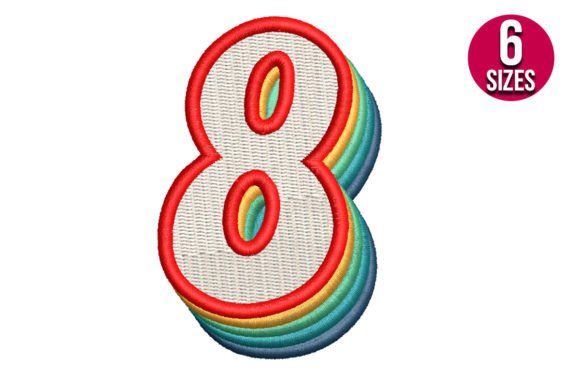
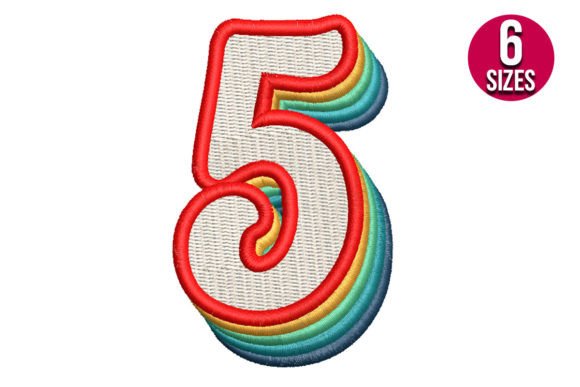
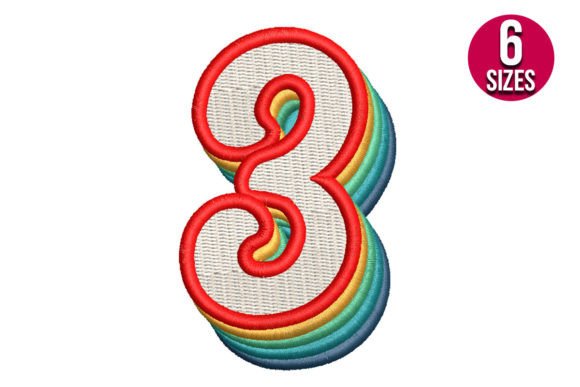
The first thing that strikes me about Retro Number Three is its inherent versatility. The title suggests a nostalgic, mid-century aesthetic, which is currently trending heavily in boutique retail and lifestyle branding. Unlike sterile, modern sans-serif digits, a retro-style number carries warmth. It feels approachable, friendly, and slightly playful without sacrificing professionalism. For a small business, this visual personality is crucial. It signals that the brand values creativity and human connection.
While the product description highlights its use for hoodies and room decor, I see immediate potential for more targeted commercial uses. The "retro" element implies a certain thickness in the lines, which is excellent for visibility. In the world of commercial embroidery, clarity is king. If a customer cannot read the design from three feet away, it fails as a branding tool. This design appears to prioritize boldness, making it a strong candidate for logos, team numbers, or anniversary markers.
Real-World Applications for Small Business Merchandise
Let us move beyond theory and look at how Retro Number Three performs in real-world scenarios. I have evaluated this design against several common use cases for handmade brands and local businesses.
- Embroidered Patches: This is perhaps the strongest application. A retro number works beautifully as a standalone patch. Whether used on denim jackets, canvas totes, or laptop bags, the design acts as a modular branding element. Businesses can sell these as add-ons or use them to mark limited-edition drops.
- Staff Uniforms and Aprons: For cafes, bakeries, and florists, uniformity builds trust. Embroidering a staff number or a specific team identifier using this design on aprons adds a layer of organized professionalism. It turns a standard uniform into a curated custom apparel piece that customers notice and appreciate.
- Cap Embroidery: Caps are high-value merchandise items. The curved surface of a cap front requires designs that are not too wide or overly complex. If the proportions of Retro Number Three are balanced, it serves as an excellent chest-side or front-center accent. It avoids the clutter that often plagues smaller cap designs.
- Tote Bag Design: Canvas tote bags are staples for eco-conscious brands. A large, bold retro number embroidered on the center of a tote creates a striking graphic statement. It transforms a simple bag into a walking advertisement for the brand’s aesthetic.
Furthermore, for Etsy sellers and crafters, this design fits perfectly into the Birthdays niche. However, do not limit it to age markers. Use it for table numbers at events, shelf markers in retail stores, or even as part of a larger date-based logo for anniversaries. The flexibility of a single numeral allows for creative bundling with other design assets.
Technical Considerations and Production Challenges
While the aesthetic appeal is high, any experienced embroiderer knows that beauty means nothing if the stitch-out fails. Here are the technical areas where you must exercise caution when using Retro Number Three.
Stitch Density and Fabric Texture: Retro fonts often feature thick fills. If the stitch density is too high, the design can become stiff and may pucker lightweight fabrics like t-shirts or silk blends. I recommend testing this design on a scrap piece of your intended fabric first. If you are embroidering on textured fabric, such as terrycloth towels or heavy denim, ensure the design has enough underlay to prevent sinking. Conversely, on smooth performance fabrics, high density might cause pulling.
Size Constraints: Never assume a design scales infinitely. If you plan to use this as a tiny label on a collar or a small detail on a child’s garment, check the minimum viable size. Fine details in retro lettering can blur if scaled down too far. Always create a printable mockup at actual size to verify legibility before hooping.
Thread Colors and Contrast: The success of this design relies heavily on contrast. A retro style often looks best with muted, vintage-inspired palettes or high-contrast black and white. Test it in monochrome first. If the design loses its shape without color variation, it may rely too much on shading rather than structure. For dark uniforms, ensure you have a proper satin border or underlay to make the colors pop.
Enhancing Brand Identity and Customer Trust
Why does the choice of a specific embroidery file matter for brand identity? Consistency. When a customer sees the same high-quality retro number on your packaging, your social media, and your physical products, it builds recognition. Retro Number Three offers a distinct visual hook. It is not generic. Using a unique, stylized numeral instead of a standard font distinguishes your handmade product from mass-produced competitors.
Moreover, high-quality embroidery signals value. A well-stitched patch or logo suggests that the business cares about details. This perception increases the perceived value of the finished product, allowing small businesses to command higher price points. Whether it is a numbered limited edition sneaker customization or a staff apron in a high-end boutique, the tactile nature of embroidery engages customers in a way that print cannot.
Practical Designer Notes for Implementation
Before you purchase and produce, follow this checklist to ensure success with Retro Number Three:
- Verify Technical Specs: The product description is brief. You must confirm the exact hoop size requirements, file formats (PES, DST, JEF, etc.), and stitch count before buying. Ensure your machine supports the file type.
- Check Licensing: Confirm that the license allows for commercial use. Most digital files do, but some restrict the number of physical items you can sell. Read the terms carefully to protect your business.
- Stabilizer Selection: Choose the right stabilizer for your fabric. Cut-away stabilizer is usually best for garments that will be washed frequently, while tear-away may suffice for decorative items that see less wear.
- Test Run: Always stitch a sample on the actual material you intend to use. Check for thread breaks, nesting, or registration issues. Adjust tension if necessary.
- Mockup for Approval: If working with a client, send a digital mockup showing the design on their specific product. This manages expectations and reduces revision requests later.
In conclusion, Retro Number Three is more than just a birthday decoration. It is a versatile branding tool for the modern small business. With careful attention to technical details and strategic placement, it can elevate your small business merch, enhance your brand identity, and delight your customers. Treat it not just as a design, but as a component of your broader visual strategy.